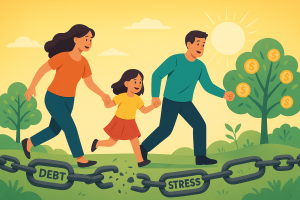
Feeling stuck in debt? You can take action now with a clear plan to pay it off—no miracle required.
- Key Takeaways
- Step-by-Step Process To Get Out Of Debt
- Effective Strategies And Solutions For Debt Relief
- Frequently Asked Questions
- What are effective strategies to pay off significant debt with a low income?
- What steps can someone with no money and poor credit take to begin addressing their debt?
- How can individuals apply for government grants or debt relief programs?
- What is a realistic timeline to eliminate debt and how can it be achieved?
- How can one pay off a specific sum, like $8,000, in a brief period such as 6 months?
- What are the initial actions to take when starting the journey towards being debt-free?
- Conclusion
Use a step-by-step method: list every debt, cut unnecessary spending, and target one account at a time. This way, you’ll see progress faster and feel more in control.


Track your balances, tighten your budget, and pick a payoff strategy that fits your life. You can reduce what you owe and start feeling more confident about your money.
This plan lays out practical moves: negotiate interest, consolidate accounts if it makes sense, and shift payments to speed things up. You’ll find options for low income, tight budgets, or all sorts of debt mixes—so you can choose what actually works for you.
Key Takeaways
- List all debts and monthly costs to know exactly what you owe.
- Pick one payoff approach and keep payments steady to build momentum.
- Cut your budget, move interest rates, or consolidate only if it truly lowers costs or makes life easier.
Step-by-Step Process To Get Out Of Debt

Here’s what to do: list every debt, build a budget that frees up cash, choose a repayment plan, and pay debts in order. Each step tells you what to track and how to move your money each month.
Take Inventory Of Your Debt
Write down every account: creditor, balance, interest rate, minimum payment, and due date. Grab your latest statements and check your credit report at annualcreditreport.com to spot missing debts or mistakes.
Make a simple table or spreadsheet with columns for Account, Balance, APR, Minimum Payment, and Status. Add a “Target Payoff Date” column to set goals.
Total your balances and your monthly minimums. That way you know the whole picture.
Mark high-interest accounts first. Flag any past-due or collections accounts for urgent attention. Check your credit score too—it’ll help you see progress as you pay down debt.
Create A Budget For Debt Payoff
Track one month of spending with a budgeting app or just a notebook: rent, utilities, groceries, transport, subscriptions, extras. Compare this to what you actually bring home after taxes.
Cut or reduce nonessential stuff like streaming, eating out, and unused subscriptions. Move that money into a “debt payoff” line in your budget.
Set a fixed amount each payday for debt. Set up automatic transfers to a separate account so you don’t accidentally spend it.
Check your budget every month and tweak categories like groceries or gas to squeeze out more for debt payments.
Choose A Debt Repayment Strategy
Pick a method that fits your motivation and budget. If you need quick wins, use the debt snowball: pay extra on the smallest balance and minimums on the rest. Want to save more on interest? Try the debt avalanche: pay extra on the highest APR first.
Do the math—estimate how many months each method will take and how much interest you’ll pay. Got several high-interest cards? Consider consolidating or using a balance-transfer card, but check the details first.
If income is tight, focus on debts with penalties or risk of repossession. Dispute any errors on your credit report before you start. If you’re overwhelmed, reach out to a credit counseling agency for a debt management plan.
Prioritize And Pay Off Debt
Order your debts by the strategy you picked: smallest balance for snowball, highest APR for avalanche. Always pay at least the minimums on everything to avoid late fees and credit dings.
On payday, pay minimums on all accounts, then send extra to your priority debt. When you pay off a debt, roll that payment into your next target (that’s the “snowball” effect).
Boost payments by adding side hustle money, asking for a raise, or cutting more expenses. If you get a windfall, toss most of it at your top debt. Keep a small emergency fund ($500–$1,000) so you don’t have to use credit for surprises.
Effective Strategies And Solutions For Debt Relief
You’ve got options to lower costs, simplify payments, or get help—depending on your debt and credit. Choose what actually cuts interest, stops late fees, and fits your budget.
Negotiating With Creditors
Call creditors as soon as you miss a payment. Ask for a lower interest rate, a temporary hardship plan, or a lump-sum payoff deal.
For credit cards, request a rate cut or payment plan to avoid penalties. For collections, negotiate a settlement for less than you owe—get it in writing and keep proof.
Have your account numbers, income, expenses, and a payment offer ready before you call. Write down names and dates for every conversation. For tax or federal student loans, ask about formal programs like an offer in compromise or income-driven repayment.
Seeking Professional Debt Assistance
If you’re not sure about negotiating or consolidating, get nonprofit help. A nonprofit credit counselor can teach you about money and set up a debt management plan (DMP) to lower interest and combine payments.
Look for groups with the National Foundation for Credit Counseling or the Financial Counseling Association of America. Be careful with for-profit debt relief companies and debt settlement firms—they often charge high fees and can hurt your credit. If you’re thinking about bankruptcy (Chapter 7 or Chapter 13), talk to a consumer bankruptcy attorney first.
Frequently Asked Questions

Here are direct, practical answers you can use right now to reduce debt, stop fees, and build a plan that fits your life.
What are effective strategies to pay off significant debt with a low income?
List every monthly bill and debt by balance, interest rate, and minimum payment. Use a simple spreadsheet or free app to keep track.
Pick a strategy: prioritize high-interest accounts (debt avalanche) or start with the smallest balances (debt snowball). Choose what fits your mindset and money situation.
Cut or pause nonessential spending and put that cash toward debt. Sell unused stuff, cancel subscriptions, and trim food or transport costs to free up money.
Find ways to bring in a little more. Work extra hours, try gig work, or sell a skill online. Send extra income straight to your top-priority debt.
If you qualify, try a consolidation loan or a lower-rate balance transfer to cut interest. Read the fine print and compare offers—sites like Investopedia’s debt reduction guide can help.
What steps can someone with no money and poor credit take to begin addressing their debt?
Call collectors and explain your situation. Negotiate lower payments or a hardship plan—ask for reduced interest, waived fees, or a payment schedule you can handle.
Set up a tiny emergency fund of $500, even if it takes a while. This keeps you from adding new debt when life throws a curveball.
Check out local charities and government programs for help with food, housing, and utilities—then use any extra money for debt.
How can individuals apply for government grants or debt relief programs?
Look up your city and state websites for emergency help with rent, utilities, and basics. Apply right through official portals—don’t trust random links.
For federal student loan relief, check the Department of Education website and apply through your loan servicer. Have pay stubs and tax returns handy.
If something sounds fishy, verify programs with the Federal Trade Commission or Consumer Financial Protection Bureau. Never pay big upfront fees or trust anyone who says they’ll erase debt instantly.
What is a realistic timeline to eliminate debt and how can it be achieved?
Figure out your monthly surplus: income minus essentials and minimum payments. Divide a debt balance by your surplus to estimate how many months it’ll take to pay off.
Say you can send $300 a month to a $6,000 credit card—you’ll need about 20 months, plus interest. More payments or lower interest speeds things up.
Check in every 3 months to review spending, tweak goals, and throw any extra income at your debt. Progress might be slow at first, but it adds up faster than you think.
How can one pay off a specific sum, like $8,000, in a brief period such as 6 months?
Take $8,000 and divide it by 6. That’s about $1,334 a month—yikes, but it’s your target.
Check if you can actually swing that after covering rent and food. If not, you’ll need to get creative.
Slash your spending. Housing, car stuff, streaming, groceries—nothing’s sacred.
Sell off anything valuable you don’t use. Tax refund coming in? Toss it at the debt. Same goes for any bonus cash.
Pick up side gigs—drive, freelance, whatever pays—and throw every extra dollar at the balance.
Call your creditor. Ask if they’ll cut you a break on interest or pause fees while you hustle.
If interest is brutal, maybe transfer the balance to a 0% promo card. Watch for transfer fees and how long the offer lasts, though. Don’t get caught off guard.
What are the initial actions to take when starting the journey towards being debt-free?
Gather every bill, statement, and balance. Jot them down with interest rates and minimums.
Add up the total debt. Figure out your monthly cash flow—what’s coming in and what’s going out.
Build a bare-bones budget that only covers the must-haves. Give every dollar a job, even if it’s just keeping the lights on.
Set up autopay for minimums so you never get hit with late fees. Schedule a recurring transfer for extra debt payments, too.
Pick one paydown strategy and stick with it for three months. Check your progress every week. If you fall behind, tweak your plan and keep moving.
Conclusion

Honestly, just break things into steps and keep moving. Start small if you need to, keep track, and give yourself a little credit for each payment.
Stick to one payoff plan that feels realistic for your budget. Life changes, so adjust if you have to, but try to pay more than the minimum when you can.
Build an emergency fund, even if it’s tiny at first. That little cushion can make a real difference when things go sideways.
Try using tools or advice that help you stay organized. A budget app might help, or maybe check out some step-by-step debt guides if you want to compare strategies.
If you’re struggling, talk to your creditors. Sometimes they’ll offer hardship programs or work with you, which can lower your stress and maybe even speed things up.
Your pace matters more than getting it perfect. Just keep going—those consistent actions actually do lead to lower balances and more control over your money.