

Paying off debt can feel overwhelming, especially when your paycheck barely covers the bills. A side hustle brings in extra cash just for debt repayment, helping you get debt-free way faster than relying on your main income alone.
Plenty of people have used side hustles to speed up their debt payoff and take back control of their money.
- Key Takeaways
- How Side Hustles Turbocharge Debt Payoff
- Choosing the Best Side Hustle for You
- Top Online Side Hustles for Paying Off Debt
- Best Local and In-Person Side Hustles
- Maximizing Side Hustle Earnings for Debt Payoff
- Strategic Debt Repayment with Side Hustle Income
- Conclusion
- Frequently Asked Questions
- What are the most effective side hustles to help reduce personal debt?
- Can you suggest some side jobs that require no experience but can assist in debt repayment?
- What are some strategies to generate passive income to help with paying off loans?
- How can I find legitimate work-from-home opportunities to earn extra money for debt elimination?
- What are the best online platforms to find daily-paying side gigs to tackle debt faster?
- Could you explain the 50/20/30 budget rule and how it can aid in managing debt while working a side hustle?
There are more options than ever these days. Whether you want to work from home or take on local gigs, you’ll find side hustles for every schedule and skill set.
The trick is picking something that fits your time and abilities, but also brings in enough to make a dent in your debt.
This guide covers the best side hustles for debt payoff in 2026. You’ll see which gigs pay the most, how to find your fit, and ways to make every dollar count toward kicking debt to the curb.
Key Takeaways
- Side hustles give you dedicated extra income to pay off debt faster—sometimes by months or years
- The best side hustle depends on your schedule, skills, and how much extra you need to earn
- Putting side hustle earnings toward high-interest debt first gives you the most progress
How Side Hustles Turbocharge Debt Payoff
Side hustles create instant cash flow you can throw straight at your debt, way beyond what you’d get from just cutting expenses. When you use your side hustle money only for debt payoff, you can knock off months or even years compared to just making minimum payments.
The Benefits of Extra Income for Debt Reduction
Side income goes right to your debt balance and doesn’t mess with your regular budget. Each extra dollar from a side hustle hits the principal, which means you pay less interest in the long run.
Your main job covers bills and minimums. Side hustle cash becomes pure debt-busting power. Tossing an extra $500 a month at a $10,000 credit card at 18% interest could save you years of payments and thousands in interest.
Seven in 10 side hustlers use their earnings to pay off debt, so clearly this works for a lot of people. Side hustles also help you pick up new skills and connections, and the boost you get from watching balances drop? That’s real motivation.
Side Hustles vs. Cutting Expenses
There’s only so much you can cut from your spending before it starts to hurt your quality of life. But with side income, there’s no set limit on what you could earn.
Trimming your budget might get you an extra $200 a month by skipping subscriptions or eating out less. A side hustle could bring in $500, $1,000, or even $2,000, depending on your effort and skills.
Cutting expenses gives you quick savings, but it can feel restrictive. Earning more feels empowering. You get to pick when you work and how much you make. Doing both—spending less and earning more—gets you out of debt the fastest.
Accelerating Debt Repayment Timelines
Side hustle earnings can seriously speed up your debt payoff. A $15,000 balance with just minimum payments might take a decade to clear. Add $300 extra a month from side gigs, and you could wipe it out in three years.
Both the debt snowball and avalanche methods work better with more cash. Bigger payments knock out debts faster, and every paid-off account frees up more money for the next one.
Your side hustles to pay off debt work best when you put every dollar right toward your balances. Track your progress each month to see how much quicker you’re getting to freedom. Even 5-10 hours a week of side work can make a huge difference in your timeline.
Choosing the Best Side Hustle for You
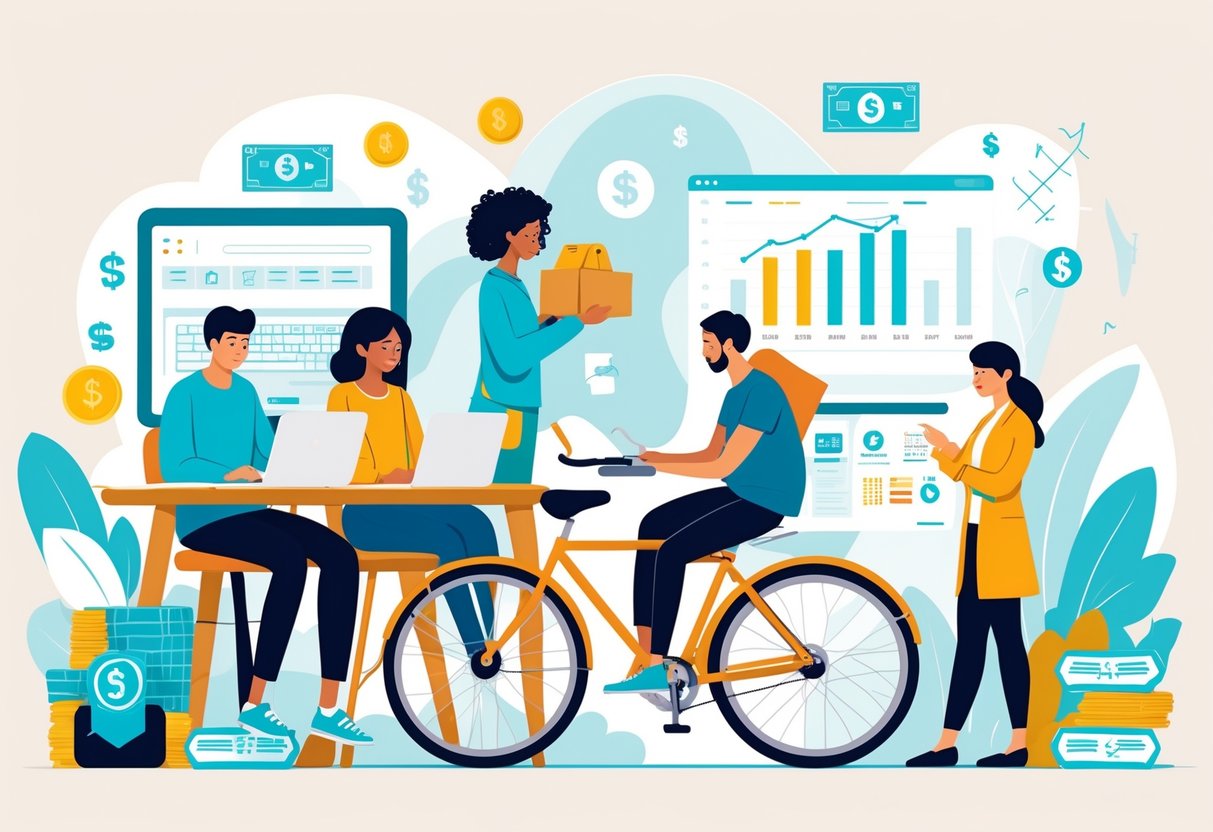
Picking the right side hustle is all about matching your time and skills to gigs that pay well but don’t burn you out. Think about what you already know, what gear you’ve got, and how much energy you can really spare.
Assessing Your Skills, Resources, and Time
Start by jotting down your skills. Can you write, fix things, or work with computers? Those talents could turn into money without much extra training.
Check what resources you have. Got a reliable car? Delivery or rideshare could work. Have a laptop and Wi-Fi? Try freelancing. Even a toolbox opens doors for handyman gigs.
Time matters too. Count up how many hours you can work each week without losing sleep or family time. Be honest with yourself—some weeks are just tougher than others.
Key factors to consider:
- Your strongest work skills
- Tools or equipment you already have
- Available hours on weekdays and weekends
- Your energy and focus after your main job
Match these with side hustle ideas that fit your life. If you’re a good writer with a laptop, you could start freelancing tonight. If you’ve got a car, gig economy driving is an option by the weekend.
Finding Flexible Side Hustle Ideas
Flexible side hustles let you work when it fits you. Online tutoring means you can pick evenings or weekends. Pet sitting with apps like Rover lets you choose which jobs to take.
The gig economy’s full of options that pay fast. Food delivery lets you log in during lunch or after dinner. Freelance writing platforms connect you with clients who need articles on your schedule.
Check out these flexible side gigs based on your situation:
| Your Situation | Best Options |
|---|---|
| Have a car | Ride-sharing, food delivery, errand services |
| Work from home | Virtual assistant, freelance writing, online tutoring |
| Free weekends | Pet sitting, yard work, event help |
| Creative skills | Selling crafts on Etsy, graphic design, photography |
Remote work cuts out commute time and gives you more hours to earn. Virtual assistant gigs pay $15-$30 an hour for things like managing emails and schedules. Graphic design on sites like 99designs can bring in $300-$1,000 per project.
Avoiding Burnout While Earning More
Start small—maybe 5-10 hours a week—so you don’t get exhausted right away. You’ll figure out what works and can add more hours later if you want.
Pick gigs you actually like, or at least can tolerate. If you hate driving, don’t do ride-share just for the money. You’ll burn out and quit before your debt’s gone.
Set clear work boundaries. Decide which days and hours are for your side hustle, and stick to it. Don’t let apps or clients push you to work when you need a break.
Watch for burnout signs like:
- Feeling tired all the time, even after sleep
- Getting snappy with family or coworkers
- Skipping meals or exercise
- Your main job performance slipping
Take at least one full day off each week to recharge. Use that time for yourself, not more work. Choosing side hustles that fit your life means you can actually stick with it until your debt’s gone.
Track your earnings and check in on how you’re feeling every week. If the stress is up but the money isn’t, try a different hustle. It’s about steady progress, not burning out in a sprint.
Top Online Side Hustles for Paying Off Debt
Online work gives you flexibility and quick cash without commuting. You can start earning in a few days by using your current skills or picking up new ones with free resources.
Freelancing and Remote Gigs
Freelance platforms connect you with clients who need help on specific projects. Upwork and Fiverr are two of the big ones where you can set up a profile and bid for jobs.
Freelance writing pays anywhere from $20 to $100+ an hour, depending on your experience and what you’re writing. You might do blog posts, website copy, product descriptions, or marketing content.
Graphic design brings in $25 to $85 an hour. With tools like Canva, you can make social media graphics, logos, and marketing stuff—even if you’re not a pro yet.
Virtual assistant jobs pay about $15 to $30 an hour. You might handle email, scheduling, data entry, customer service, or social media for entrepreneurs and small businesses.
These remote opportunities let you work around your main job. Most just need a computer and internet—startup costs are low.
Online Tutoring and Teaching
If you know a subject well, teaching online can bring in steady money. Tutor.com, Wyzant, VIPKid, and Varsity Tutors all connect tutors with students.
You can earn $20 to $40 an hour tutoring math, science, English, or test prep. Most platforms don’t require a teaching certificate, though some prefer a college degree.
VIPKid focuses on teaching English to kids overseas, and sessions usually happen early mornings or evenings to match those time zones.
On Wyzant, you set your own rates and gradually build a client list. Creating an online course on sites like Udemy or Teachable can also bring in passive income after you set it up.
Selling Digital Products and Content Creation
Digital products take upfront work, but after that, they can earn money again and again. You only need to create the product once and sell it as many times as you like.
Templates for resumes, budgets, planners, or social media posts do well on Etsy and personal websites. People buy these to save time on design and get a polished result fast.
Ebooks about topics you know well can bring in passive income through Amazon Kindle Direct Publishing or your own site. You write the book once, and then you get paid each time someone buys it.
Affiliate marketing means you promote other companies’ products with special links. If someone buys through your link, you get a commission. This works best if you have a blog, YouTube channel, or a decent social media following.
Etsy sellers often make $1,000 to $5,000+ a month selling digital downloads like printable art, wedding invites, and business templates. Etsy handles payments, so you can focus on the creative side.
Online Marketplaces and Reselling
Reselling online can turn things you don’t need into fast debt payments. You can find items at thrift stores, garage sales, or just look around your own home.
eBay is great for electronics, collectibles, and vintage stuff. You snap some photos, write a description, and ship the item when it sells.
Facebook Marketplace hooks you up with local buyers, so you skip shipping. It’s handy for selling furniture, appliances, tools, and other household things to people nearby.
Poshmark and Depop are focused on clothing, shoes, and accessories. Fashion-forward buyers often pay well for quality or trendy pieces.
You can get started by selling things you already have. Plenty of people earn $100 to $1,000+ per month by flipping items on online marketplaces and then using profits to buy more inventory.
Best Local and In-Person Side Hustles
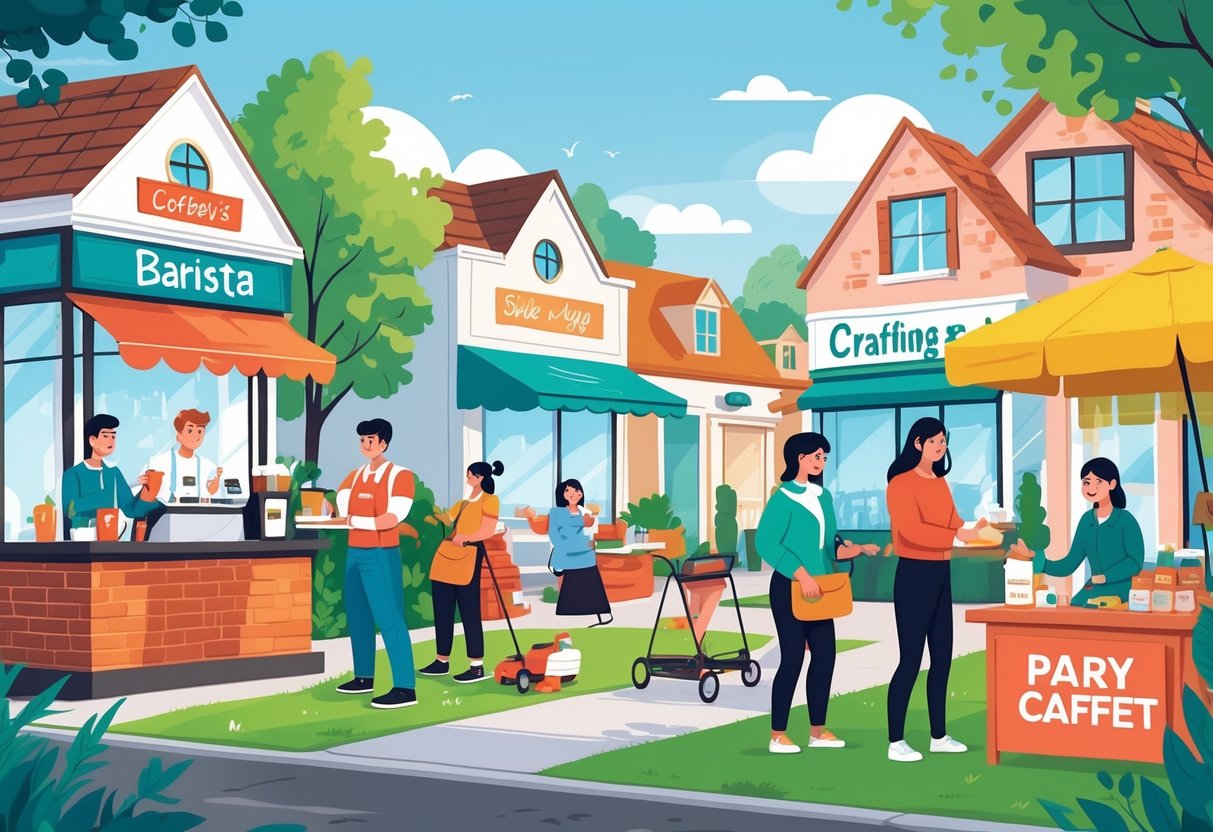
Local side hustles let you earn money right in your community. You don’t need to build an online presence or wait for remote gigs. These jobs usually pay fast and let you work around your main job.
Driving and Delivery App Opportunities
Ride-sharing apps like Uber and Lyft pay you to drive people to their destinations. You pick your own hours and work as much or as little as you want.
Uber drivers usually make $15-25 per hour, but in busy cities, it can be closer to $30. Delivery driving is a good option if you prefer less chatting with passengers.
DoorDash, Uber Eats, and Grubhub pay you to pick up restaurant orders and drop them off. Instacart is similar, but you shop for groceries instead.
You’ll need a reliable car and a clean driving record. How much you make depends a lot on where you live and how busy things get. Lunch and dinner rushes usually pay more thanks to surge pricing or bonuses.
Pet Sitting, Dog Walking, and Babysitting
Pet care is always in demand. Busy owners need help when they’re at work or traveling. You can sign up on apps like Rover and Wag to find local clients.
These platforms take a cut, but they handle marketing and payments. Dog walking is a nice way to get paid for exercise and fresh air. Pet sitting pays more since it usually means overnight stays or longer visits.
Babysitting is a solid option if you like working with kids. Parents need sitters for date nights, events, and hectic weekdays. Care.com and Sittercity can help you find jobs nearby.
Sometimes, you can even bring your own kids along if the family is cool with it. Just ask ahead of time.
Odd Jobs, House Cleaning, and Handywork
TaskRabbit and Handy connect you with people needing help around the house. You might hang shelves, put together furniture, mount TVs, or do basic repairs.
You set your own schedule and pick the gigs you want. House cleaning doesn’t take much to start—just basic supplies, and often clients provide what you need.
Word of mouth and social media work well for finding clients. Completing gigs through these platforms keeps things interesting. One day you might move furniture, the next you’re doing yard work or running errands.
Odd jobs can pay well because people value their time and would rather hire help than do it themselves.
Maximizing Side Hustle Earnings for Debt Payoff
Making extra money is just the first step. You need a clear plan to make sure every dollar actually helps you crush your debt and keeps you safe from surprise expenses.
Budgeting and Tracking Extra Income
Keep your side hustle earnings separate from your regular paycheck. Open a new checking account just for side gig money so you can see exactly what you’re bringing in each month.
Build a budget that sends all this extra cash straight to debt payments. Don’t let side hustle money slip into your usual spending. It’s easy to treat extra income as fun money, but that slows you down.
Track every payment with a spreadsheet or a budgeting app. Write down which debt you paid, how much, and when. It helps you see real progress.
Pay more than the minimum on your highest-interest debt first. If your credit card charges 22% interest and your student loan is only 5%, throw side hustle money at the card after covering minimums elsewhere.
Building an Emergency Fund
Before you go all in on debt, save your first $1,000 from side hustles. This small emergency fund stops you from racking up new debt when life throws a curveball.
Keep this money in a separate savings account and don’t touch it unless it’s a true emergency—think car repairs, medical bills, or urgent home fixes. Not new shoes or vacation plans.
Once you’ve got that $1,000, send all future side hustle earnings to debt. The emergency fund is your safety net while you focus on becoming debt-free.
Important Tax Considerations for Side Hustlers
You owe taxes on all side hustle income, even if it’s cash or just a few hours a week. Set aside 25-30% of every payment for taxes—seriously, it sneaks up fast.
Keep this tax stash in a separate savings account. You’re responsible for self-employment tax (about 15.3%) plus your regular income tax rate.
Apps like QuickBooks help you track all income and expenses. Save receipts for anything you buy for your side hustle—supplies, mileage, or equipment.
If you expect to owe more than $1,000 in taxes for the year, make quarterly estimated payments. The IRS charges penalties if you wait until April. Payments are due April 15, June 15, September 15, and January 15.
Deduct legit business expenses to lower your tax bill. That includes the portion of your phone bill used for work, internet costs, and miles driven for side hustle activities.
Strategic Debt Repayment with Side Hustle Income
Extra money from a side hustle needs a solid plan to really make a difference. You can pick between the debt snowball and avalanche methods, or sometimes debt consolidation makes sense depending on your situation.
Applying the Debt Snowball Method
The debt snowball method means you pay off your smallest debts first while making minimums on the rest. List all your debts from smallest to largest balance, no matter the interest rate.
Once you clear the smallest debt, roll that payment into the next one. Your payments get bigger as you knock out each debt.
This strategy is great if you need quick wins to stay motivated. Watching debts disappear feels good and keeps you moving forward.
How to apply your side hustle income:
- Send all your extra earnings to the smallest debt
- Keep up minimum payments on the others
- When a debt is gone, add its payment plus your side hustle money to the next smallest
- Keep tracking your payoffs to stay pumped
The snowball method can cost more in interest compared to other options. Still, if motivation is what keeps you going, this approach delivers.
Using the Debt Avalanche Approach
The debt avalanche method targets your highest-interest debts first. List all debts by interest rate from highest to lowest, then attack the most expensive one while keeping up minimums elsewhere.
This saves you the most in interest charges. Seven in 10 side hustlers use their earnings to pay off debt, so this approach is popular when you’ve got extra income coming in.
Credit cards and personal loans usually have the highest rates. Student loans are often lower but still worth paying off faster if you can.
Debt avalanche steps:
- Figure out the interest rate on each debt
- Throw all your side hustle income at the highest rate debt
- Keep making minimums on the rest
- Move to the next highest rate after each payoff
This approach takes patience since the high-rate debts might be big. But you’ll pay off debt faster and spend less overall compared to the snowball method.
When to Consider Debt Consolidation
Debt consolidation means rolling several debts into one loan with a single monthly payment. It can work well if you lock in a lower interest rate than what you’re paying now.
Personal loans for consolidation usually offer rates from 6% to 36%. Balance transfer cards might give you 0% interest for up to 21 months, but they tack on transfer fees of 3% to 5%.
If you have good credit and juggling payments stresses you out, consolidation could help. Making just one payment each month makes it easier to stay organized and might save you money on interest.
When consolidation makes sense:
- You have credit card debt above 20% APR
- Your credit score qualifies you for rates below 10%
- You can commit to not using the cards you pay off
- You want to accelerate your path to paying off debt
Consolidation doesn’t shrink your total debt. It just reorganizes how you pay. You’ll still need extra income—like from a side hustle—if you want to get out of debt faster.
Setting and Achieving Debt Repayment Goals
Clear goals help you turn vague dreams into real targets. Start by adding up your total debt, then decide how much of your side hustle money you want to put toward payments each month.
Say you want to pay off $10,000 in credit card debt in 18 months. If your side hustle brings in $500 a month, you could throw $400 at debt and keep $100 for emergencies or just to keep yourself motivated.
Big goals can feel overwhelming. Break them down into smaller wins—like paying off one card or knocking $5,000 off your student loans. Every checkpoint is a reason to celebrate, even if it feels small.
Goal-setting framework:
| Time Frame | Goal Type | Example |
|---|---|---|
| 30 days | Quick win | Pay off smallest debt under $500 |
| 90 days | Short term | Eliminate one full credit card |
| 6 months | Medium term | Reduce total debt by 25% |
| 12+ months | Long term | Become debt-free or pay off student loans |
Check your progress every week. Look at your balances, see how much you’ve paid down, and tweak your plan if something’s not working. When you start to see those numbers drop, it really helps you stay fired up about reaching your goal.
Conclusion
Starting a side hustle gives you control over your debt situation. You can earn extra money on your own schedule and put those earnings directly toward what you owe.
The key is picking something that fits your skills and available time. Whether you choose freelance writing, virtual assistance, or pet sitting, the goal stays the same: generate additional income to reduce your debt faster.
Most side hustlers use their earnings specifically for debt payoff. Studies show that 7 in 10 side hustlers use their earnings to pay off debt, which proves this approach works for many people.
You don’t need special experience to start. Many options require minimal startup costs and can begin producing income within weeks. The important thing is to take action now rather than waiting for the perfect opportunity.
Create a simple plan for how you’ll use your side hustle money:
- Put all earnings toward debt instead of lifestyle upgrades
- Focus on high-interest debts first to save money on interest charges
- Track your progress monthly to stay motivated
- Keep your side hustle income separate from regular spending money
Your path to financial freedom starts with one small step. Pick a side hustle from your research and commit to trying it for three months. You’ll gain valuable experience while making real progress on your debt.
Frequently Asked Questions
People working on paying off debt usually have a lot of the same questions about which side gigs actually help and how to use that extra cash wisely. Here are some real-world answers and ideas for earning more and crushing debt.
What are the most effective side hustles to help reduce personal debt?
Freelance writing and editing can net you $20 to $50 per hour on sites like Upwork. If you have basic computer skills, you can get started without much upfront cost.
Driving for Uber or Lyft typically brings in $15 to $25 per hour, depending on your city. Your car becomes your money-maker, and the cash can go straight to your debt payments.
Online tutoring pays $15 to $30 an hour on platforms like Tutor.com or VIPKid. You can teach subjects you know well, and for many gigs, you don’t need special certifications.
Pet sitting and dog walking with Rover pays $20 to $40 per visit. If you like animals and value flexibility, this one’s a solid pick.
Delivery apps like DoorDash or Instacart pay out $10 to $20 per hour plus tips. You can get approved quickly and start earning within days.
Can you suggest some side jobs that require no experience but can assist in debt repayment?
Dog walking doesn’t need any prior experience. If you’re comfortable with animals and free during peak times, just sign up and go.
Delivery driving for food is another easy entry. Pass a basic background check, use your own car or bike, and follow the app’s directions to complete orders.
Online surveys on sites like Swagbucks pay small amounts for your opinions. It’s not life-changing money, but $50 to $200 a month for filling out surveys in your downtime isn’t bad.
TaskRabbit connects you with people who need help moving, assembling furniture, or running errands. You set your rate and pick the jobs that suit you.
Retail or restaurant gigs offer on-the-spot training and quick hiring. If you need evening or weekend work to fit around your main job, these are pretty reliable options.
What are some strategies to generate passive income to help with paying off loans?
Affiliate marketing lets you earn commissions by sharing products on a blog or social media. Create content once, and you can get paid whenever someone buys through your link.
Renting out a spare room on Airbnb brings in steady income with minimal effort. You set your rules and schedule, then host short-term guests.
Designing digital products like printables or templates means you can sell the same thing over and over. List them on Etsy and let the sales come in while you sleep (hopefully).
Dividend stocks pay you cash just for holding shares in established companies. You can reinvest those dividends or put them toward your debt—no need to sell the stock.
YouTube channels or podcasts start slow but can earn ad money once you have an audience. Topics about debt payoff or personal finance tend to attract sponsors and viewers over time.
High-yield savings accounts pay more interest than regular ones. The returns aren’t huge, but it’s risk-free and can add up if you keep at it.
How can I find legitimate work-from-home opportunities to earn extra money for debt elimination?
Virtual assistant jobs show up on sites like Belay that screen employers. You handle admin tasks like email and scheduling for $15 to $30 an hour.
FlexJobs charges a small fee but vets every listing to weed out scams. They focus on remote and flexible jobs in all sorts of industries.
LinkedIn’s job search lets you filter for remote and part-time roles. You can look up companies directly and check employee reviews before applying.
Company websites sometimes post remote jobs that never make it to job boards. Check the careers section of businesses you already know for hidden gems.
Freelance platforms like Upwork and Fiverr require you to build a profile and bid for gigs. Start with lower prices to get reviews, then bump your rates as you get more clients.
Some professional associations post exclusive job openings for members. These tend to be legit since they’re tied to your field.
What are the best online platforms to find daily-paying side gigs to tackle debt faster?
DoorDash offers daily payouts with Fast Pay if you’re willing to pay a small fee. You can cash out right after your deliveries instead of waiting for weekly deposits.
Instacart pays weekly but has instant cashout for a small charge. You shop and deliver groceries on your schedule and get paid quickly.
Uber and Lyft both have instant pay features that move your earnings to a debit card right away. It’s a handy way to put money toward debt as soon as you make it.
TaskRabbit pays within 24 hours of completing a task, straight to your bank account. Pick local jobs that fit your skills and schedule.
Fiverr releases your funds 14 days after an order, but you can speed that up as you move up seller levels. Digital services like writing or design pay through the platform.
Rover transfers your money two days after you finish a pet sitting or dog walking job. The quick turnaround helps you keep up steady payments toward your debt.
Could you explain the 50/20/30 budget rule and how it can aid in managing debt while working a side hustle?
The 50/20/30 rule splits your after-tax income into three spending buckets. You put 50% toward needs like housing and groceries.
Then, 20% goes to savings and debt payments. The last 30% covers wants, like eating out or streaming subscriptions.
If you pick up a side hustle, you can funnel all that extra cash into the 20% category. That means you could speed up debt payments without touching your usual expenses.
Your main job still takes care of the essentials and some fun stuff. The side gig money becomes a tool for hitting financial goals faster.
Honestly, you might want to tweak the percentages if your debt feels overwhelming. Some folks flip it to 50/30/20, putting a bigger chunk toward debt payoff.
It helps to track your main job and side hustle earnings separately. Apps like Mint make it easier to see where your money goes and keep you honest.