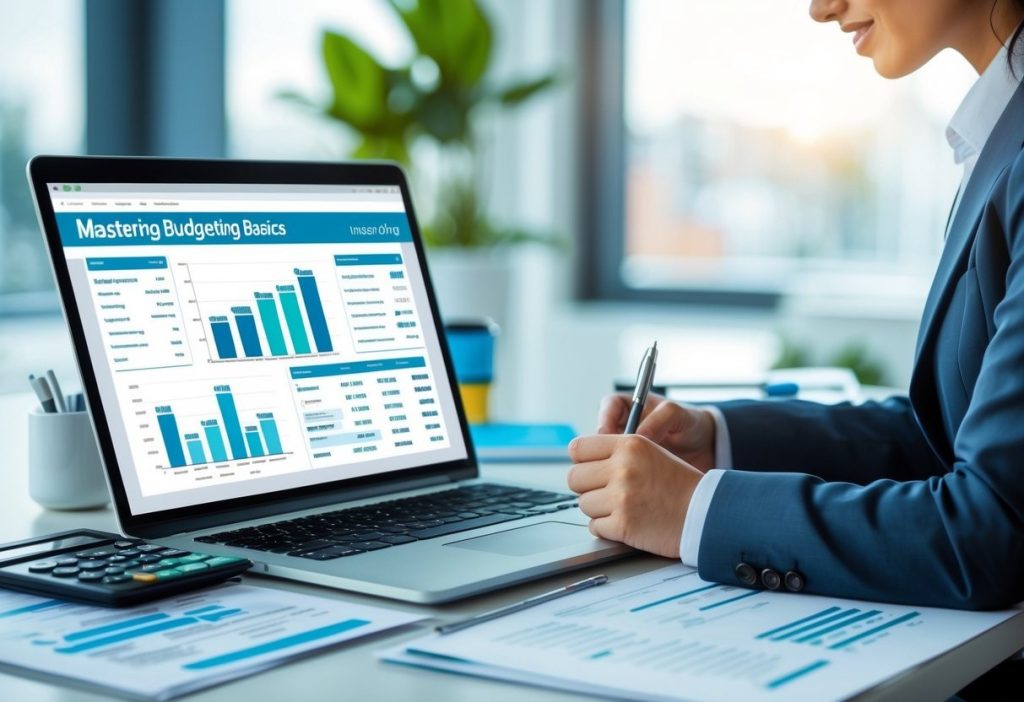
Running out of money before the month ends? That’s stressful—no way around it. You work hard for your income, but if you don’t have a clear plan, it just seems to vanish.
Master budgeting gives you a simple system to track where your money goes. It helps you make choices that actually match your goals, not just whatever feels urgent in the moment.

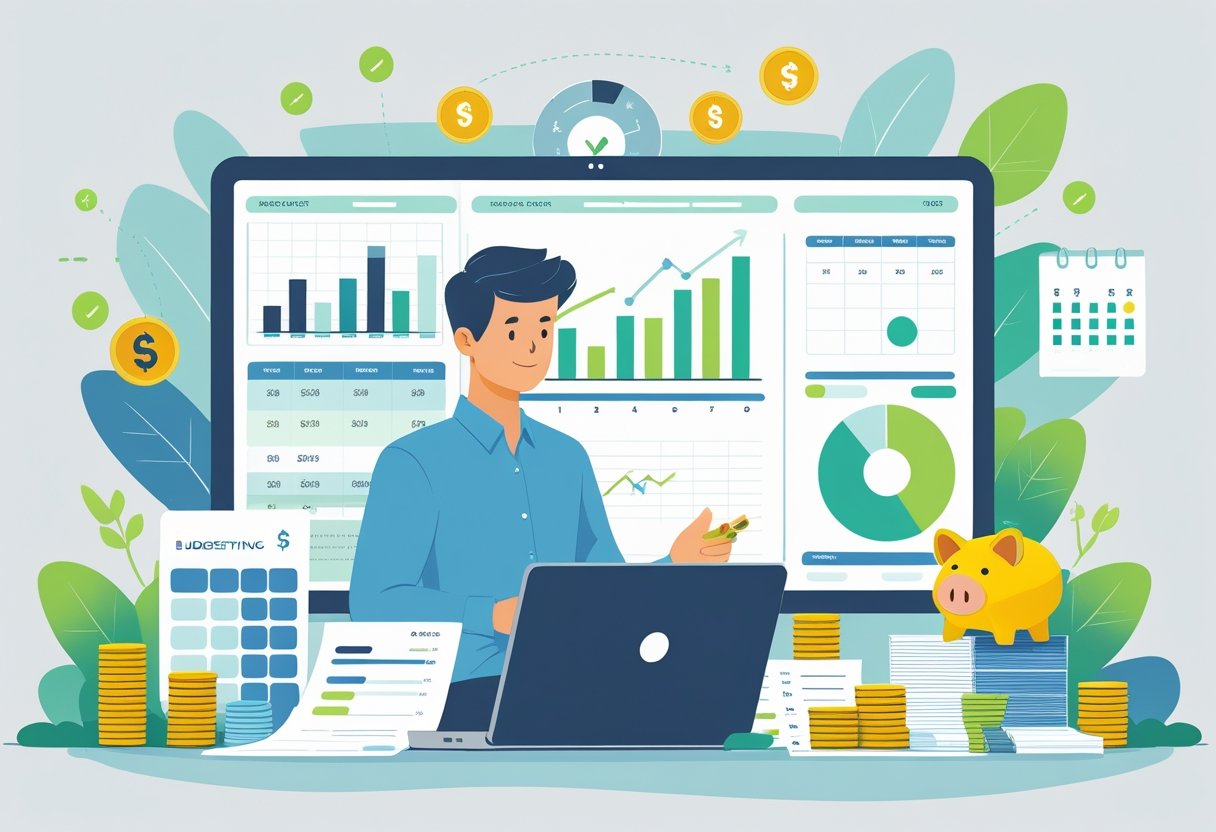
A master budget is a complete financial plan that shows all your expected income and expenses for a set period, helping you coordinate your spending across different areas of your life. For businesses, a master budget combines operating, capital expenditure, and cash budgets into one coordinated plan.
For individuals, it’s about pulling together all your financial pieces into one clear picture. That way, you’re not guessing—you’re actually seeing what’s going on.
Learning master budgeting basics will help you build financial stability. You’ll pick up ways to set goals that matter, choose budgeting methods that fit your life, and use tools that make tracking less of a headache.
Maybe you want to pay off debt, save for something big, or just stop worrying about money all the time. These fundamentals will give you a solid start.
Key Takeaways
- Master budgeting creates a complete financial plan that tracks all your income and expenses in one place
- Setting clear financial goals and choosing the right budgeting method helps you stay on track with your money
- Building strong budgeting habits leads to better financial decisions and long-term financial success
Understanding Budgeting Fundamentals
Budgeting is a cornerstone of personal finance that helps you control where your money goes each month. A budget takes your income and expenses into account to create a plan for reaching your goals.
What Is Budgeting and Why It Matters
A budget is just a plan for your money. It tracks how much you earn and how much you spend over a certain period.
It gives you estimates for your income and expenses, so you can make decisions that actually line up with your priorities.
Budgeting matters because it puts you in the driver’s seat with your finances. Without it, your paycheck can disappear before you know it, leaving you stressed and wondering where it all went.
When you create a budget, you build a financial roadmap that guides every dollar with purpose. This approach helps you avoid overspending and makes sure you’ve got money for both today and tomorrow.
Key Benefits of Budgeting
Budgeting delivers some real advantages for your financial stability. For starters, you get a clear look at your spending habits, which makes it easier to spot where you might be wasting money.
A well-planned budget helps you:
- Prevent financial stress by ensuring you don’t run out of money before payday
- Build savings for emergencies and future goals
- Make progress toward paying off debt
- Plan for large purchases without derailing your finances
- Achieve financial goals through consistent tracking and adjustments
Your budget also keeps you accountable for your personal finance choices. You can compare what you planned to spend with what you actually spent, which is honestly eye-opening sometimes.
Common Misconceptions About Budgets
Lots of people skip budgeting because they think it’s all about sacrifice or complicated math. Actually, it just helps you spend with intention. It’s not about making your life less fun.
Another myth? That budgets are only for people struggling with money. Nope—everyone benefits, no matter how much they make. Even high earners need to see if their spending matches what they care about.
Some folks believe budgets are rigid and never change. In reality, your budget should flex and adapt as your life changes. It’s more of a living document than a set of rules carved in stone.
Setting and Prioritizing Financial Goals

A master budget only works when it supports clear financial objectives. Your financial goals guide how you divide up your money and which expenses you can actually cut or bump up.
Short-Term and Long-Term Financial Goals
Short-term financial goals are things you want to knock out within a year. Think building an emergency fund, paying off a credit card, or saving for a trip. These are the ones you can track month by month in your budget.
Long-term goals take more than five years. Retirement savings, paying off a mortgage, or setting aside money for your kid’s college all fall into this bucket. These need steady contributions over time, usually in some kind of investment account like an IRA or 401(k).
Mid-term goals? Those are the in-betweeners, like saving for a house down payment or paying off student loans. Each type of goal needs its own strategy and savings approach.
How to Define Achievable Financial Objectives
Start by making your goals specific and measurable. “Save more” is nice, but “save $5,000 for an emergency fund in 12 months by putting away $420 each month” is way better.
This is where the SMART goals framework comes in handy. Write down the dollar amount and deadline for each goal, then break it down into what you need to save weekly or monthly.
Check if that amount actually fits your current income and expenses. Sometimes, reality checks are necessary.
Before you set goals, review where you stand—your income, monthly bills, savings, and debts. Knowing what you’ve got to work with makes the whole process less overwhelming.
Aligning Your Budget With Your Goals
Your budget categories should match your priorities. Fund your most important goals first, then worry about the extras. If retirement is a biggie, set up automatic transfers to your IRA before you budget for eating out.
Try the pay-yourself-first method—move money to savings and investments as soon as you get paid. That way, you’re not tempted to spend what should be saved.
Check your progress each month and tweak things if needed. If you get a raise, consider putting more toward your top goal. When you hit one target, roll that money over to the next one.
The Budgeting Process: Step-By-Step
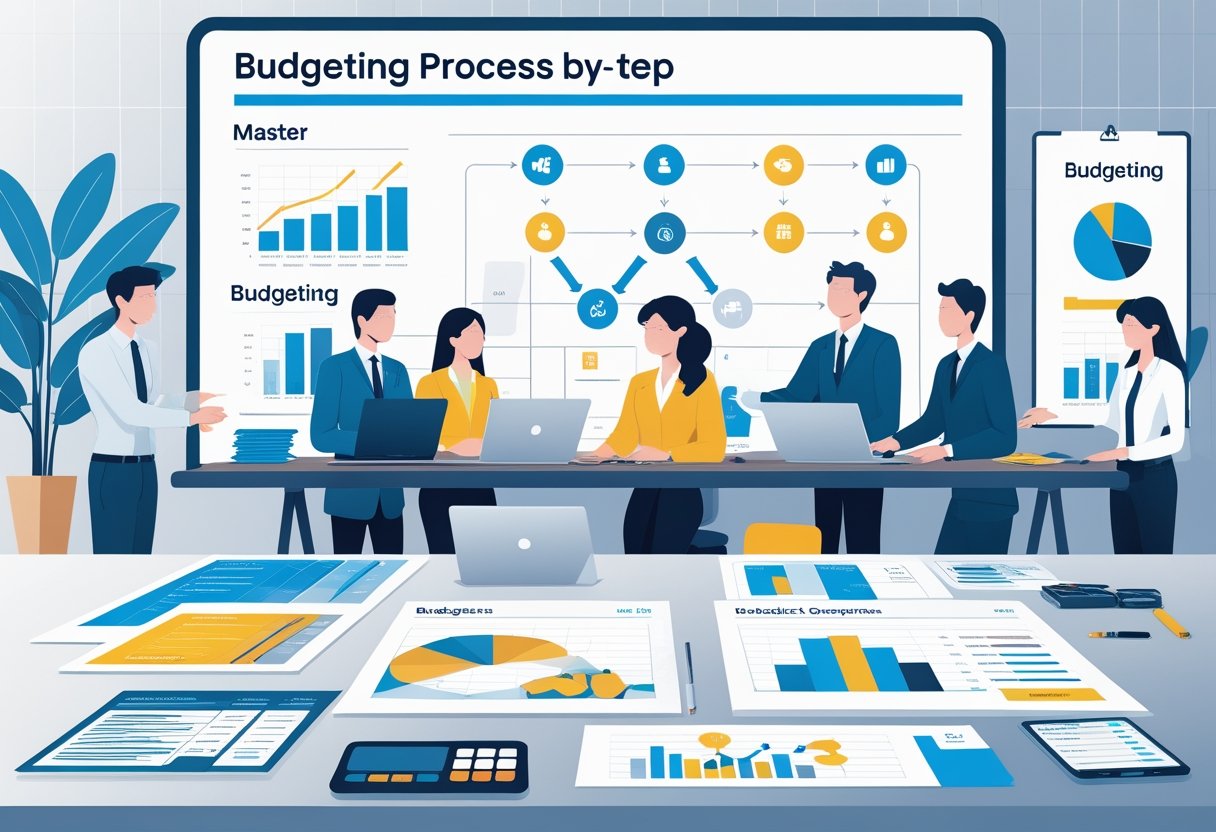
When you create a budget, there are three main steps that work together. First, figure out how much is coming in. Then, organize where it’s going. Finally, learn which costs are set in stone and which ones can change.
Tracking and Calculating Your Income
You need to know your exact income before you can create a budget that actually works. Write down all the money you get each month from your job, side gigs, investments—whatever sources you’ve got.
If your paycheck is the same every time, it’s easy. Just multiply your pay by how many times you get paid each month. For example, $2,000 twice a month means $4,000 monthly income.
With variable income, it’s trickier. Look back at your last three to six months of earnings, then find the average. That gives you a number that’s realistic for your budget.
Only count what you actually take home after taxes and deductions. Your gross pay might look great, but net pay is what you really have to spend. Don’t forget regular sources like child support or rental income if they’re consistent.
Listing and Categorizing Expenses
Once you’ve figured out your income, it’s time to track every dollar you spend. Go through your bank statements, credit card bills, and even those random receipts you’ve got stuffed in a drawer.
Write down each expense and group them into categories. Typical categories are housing, transportation, food, utilities, insurance, debt, entertainment, and savings, but you can categorize expenses however it makes sense for you.
Don’t ignore the small stuff. That daily coffee or a couple of streaming services can add up fast—sometimes hundreds a month. Track everything for at least 30 days to really see the full picture.
Here are the main spending categories you’ll probably use:
- Housing: rent, mortgage, property taxes
- Transportation: car payment, gas, insurance, maintenance
- Food: groceries, restaurants, takeout
- Utilities: electric, water, internet, phone
- Insurance: health, life, home, auto
- Debt: credit cards, student loans, personal loans
- Personal: clothing, haircuts, gym
- Entertainment: subscriptions, hobbies, events
Understanding Fixed and Variable Costs
Your expenses fall into two main types. Fixed expenses stay the same each month, while variable expenses change depending on your choices and needs.
Fixed costs are things like rent, mortgage payments, car loans, insurance premiums, and subscriptions. These don’t really change, so they’re easy to plan for.
Variable costs include groceries, gas, utilities, entertainment, and clothing. These shift month to month based on what’s going on in your life. You’ve got more control here, so if you need to cut back, this is where you start.
Some costs look fixed but actually aren’t. Maybe your electric bill is usually $150, but in summer it jumps to $200 or drops to $100 in spring. Knowing the difference between fixed and variable costs helps you plan for surprises and spot ways to save.
Popular Budgeting Methods and Strategies

Different budgeting methods let you track income and expenses in ways that actually fit your goals and habits. The best approach really depends on whether you want detailed tracking, simple splits, or more control over your spending with strict limits.
The 50/30/20 Rule Explained
The 50/30/20 rule divides your after-tax income into three parts: 50% for needs, 30% for wants, and 20% for savings or debt payments. Needs are things like rent, utilities, groceries, transportation, and insurance.
Wants cover stuff like eating out, subscriptions, hobbies, and entertainment. The last 20% goes to building emergency savings, retirement, or paying off debt beyond minimums.
If you bring in $3,000 a month, that means $1,500 for essentials, $900 for wants, and $600 for savings and debt. You can tweak these percentages if your situation calls for it.
Some folks use a 60/20/20 split if their basic expenses are higher. This method is handy if you want a framework for spending but don’t care to track every coffee or snack.
Envelope System
The envelope system uses cash divided into envelopes for categories like groceries, gas, and entertainment. You spend only what’s inside each envelope. Once it’s empty, that’s it—you’re done spending in that category until next time.
This approach makes it tough to overspend since you see exactly how much is left. You can go old-school with paper envelopes and cash or use digital apps that mimic the system with virtual envelopes linked to your bank.
It’s best for things you can control, like food or outings. Fixed bills, like rent, are easier to handle with auto-pay.
Zero-Based and Other Budgeting Approaches
Zero-based budgeting gives every dollar a job, so your income minus expenses equals zero. You plan for all spending, including saving and debt payments. This method gives you a lot of control, but it does take more effort.
Bare-bones budgeting means you cover only essentials to save aggressively or pay off debt fast. All extras are off the table, at least for a while.
Paycheck budgeting is about creating a separate budget for each pay period instead of the whole month. It’s practical if you’re living paycheck to paycheck or your bills are bunched up.
The 60% solution puts 60% toward committed expenses—both essentials and important non-essentials. The rest splits into four buckets of 10% each: retirement, long-term savings, short-term savings, and fun money.
Tools and Resources for Effective Budgeting
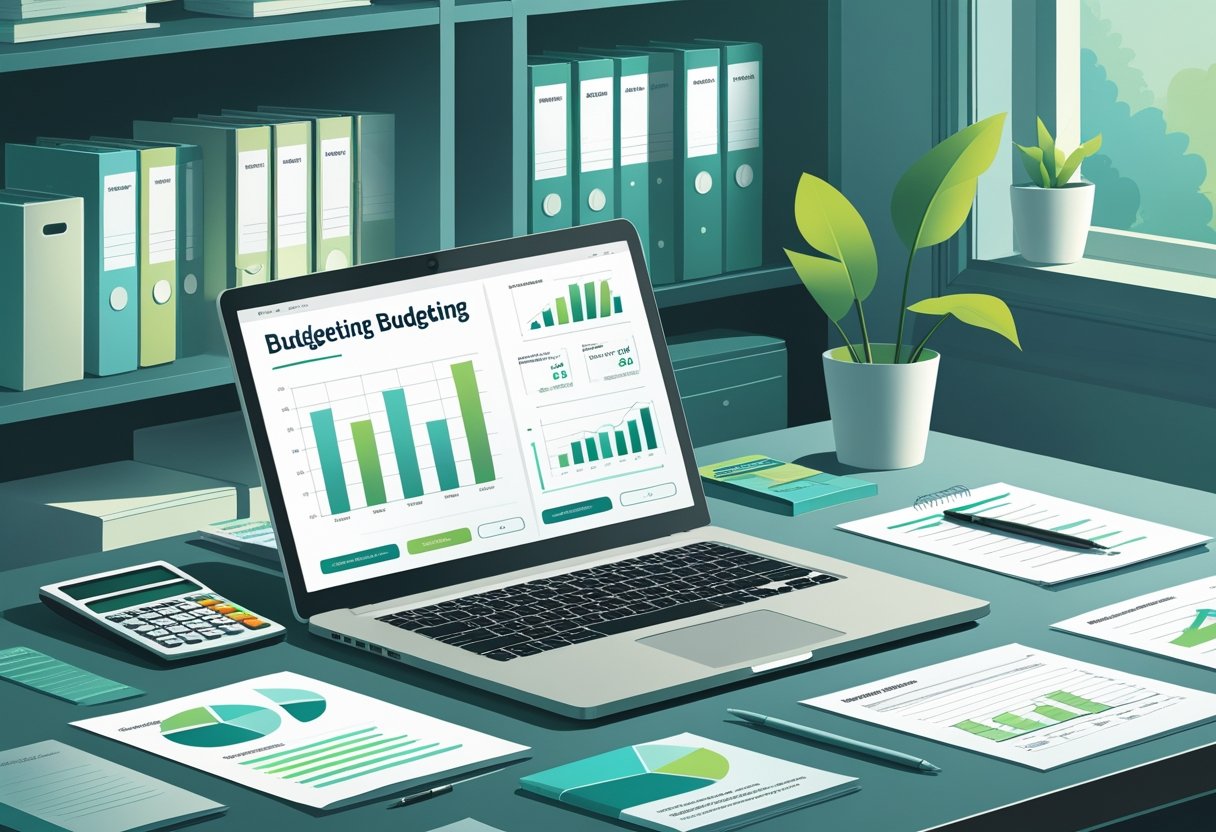
The right budgeting tools can make tracking your money a lot easier. Digital apps do the tracking for you, while spreadsheets give you total control.
Budgeting Apps and Digital Tools
Budgeting apps connect to your bank accounts and track spending automatically. YNAB (You Need A Budget) uses zero-based budgeting, so you give every dollar a job before you spend it.
This helps you plan ahead and (hopefully) avoid overspending. Mint is free and sorts your transactions for you, plus you can set limits for categories and get alerts if you’re close to overspending.
The app shows all your accounts in one place, which is honestly pretty handy. Modern budgeting apps let you create your own categories and often sync across devices.
Some even help you set and track goals like saving for emergencies or paying down debt. It’s kind of wild how much these apps can do now.
Using Excel and Spreadsheets
Spreadsheets like Excel give you the freedom to build your budget exactly how you want. You can set up formulas to total things automatically and make charts to spot trends.
Free budget templates are a good starting point, with categories set up for you. You can tweak them as needed—add or remove rows, change names, whatever fits.
Spreadsheets are great if you like hands-on control and don’t want to link your bank accounts to an app. You can even track irregular income by setting up columns for different pay periods.
Color coding is a lifesaver for quickly spotting where you’re overspending. It’s not fancy, but it works.
Choosing the Right Tool for Your Needs
Pick what matches how you like to manage money. If you want everything tracked for you, apps are the way to go.
If you want to enter things yourself and customize every detail, spreadsheets are better. Think about whether you need extras like bill reminders, debt calculators, or investment tracking.
Free tools usually cover the basics, but paid versions can offer more features and support. Your tool should fit your comfort with tech and the time you want to spend on it.
Honestly, the best tool is just the one you’ll actually stick with month after month.
Building Financial Resilience and Success
A solid master budget shields you from financial setbacks through three core habits: keeping emergency savings, making a plan to pay off debt, and regularly updating your budget as life changes.
Establishing an Emergency Fund
An emergency fund is your safety net when things go sideways. Most experts say you should save three to six months of living expenses in an easy-to-access account.
Start small—even $25 or $50 a month is a good beginning. Set up automatic transfers to a separate savings account so you’re not tempted to spend it. That way, your emergency fund grows quietly in the background.
Priority order for emergency funds:
- First, cover one month of essential expenses
- Then build up to three months
- If your income isn’t steady or your job feels shaky, aim for six months
Keep this cash in a high-yield savings account. It should be easy to access, but not so easy you dip into it for random stuff. Building resilience takes some discipline, but it’s worth it for peace of mind.
Debt Repayment and Payoff Strategies
Paying off debt needs a plan that fits you. Two popular methods help you tackle it step by step.
The avalanche method targets your highest-interest debt first. You make minimum payments on everything else, and throw any extra cash at the most expensive debt. This saves more on interest in the long run.
The snowball method is about quick wins. You pay off your smallest debt first, then roll that payment into the next smallest. It’s motivating to see debts disappear, even if you pay a bit more in interest.
| Method | Focus | Best For |
|---|---|---|
| Avalanche | Highest interest rate | Saving money on interest |
| Snowball | Smallest balance | Building momentum |
Pick the strategy that matches your personality. If you need fast progress to stay motivated, go with the snowball. If you care most about saving on interest, avalanche is better. Both work—as long as you stick with it.
Continuously Improving Your Budget
Your budget isn’t set in stone. Review it every month to see what’s actually happening with your money.
Track where your cash really goes, not just where you thought it would. You might be surprised which categories eat up more than you realized.
Monthly budget review checklist:
- Compare what you actually spent to what you planned
- Spot categories where you went over or under
- Adjust your next budget based on real patterns
- Add new categories if life changes
Update your budget if your income changes, expenses shift, or you hit a financial goal. A budget from six months ago might not fit your life today. Small tweaks now help you avoid bigger problems later—and get you closer to your goals.