Money Education Fundamentals
Teaching kids about money requires making financial concepts accessible and interesting.
Children often struggle with abstract ideas about finances, so hands-on experiences work best.
Parents can transform everyday moments into valuable learning opportunities without making the process feel like a classroom lesson.
Using Play-Based Learning Methods
Games provide natural settings for children to grasp money principles.
Traditional board games create scenarios where players must make financial decisions, track their funds, and plan ahead.
Younger versions of classic games now exist specifically designed for small children who are just beginning to understand currency.
Digital options also offer money management games that present age-appropriate challenges.
These platforms adjust difficulty levels as children grow more comfortable with basic math and decision-making.
Whether physical or digital, games remove pressure while building essential money skills.
Pretend Shopping Activities
Children spend considerable time in imaginative play scenarios.
Parents can turn toy kitchens and pretend stores into financial education spaces.
Setting up a menu with assigned costs helps children practice math while understanding that items have specific values.
Giving children play currency lets them count coins and calculate change.
Switching roles between customer and seller reinforces different aspects of transactions.
These activities build comfort with numbers and the basic flow of purchasing items.
Real Shopping Experiences
Actual stores present authentic teaching moments.
Before shopping trips, families can establish spending limits and create lists together.
Children learn that budgets control what goes into carts rather than impulse or desire alone.
Walking through aisles, children can compare costs between similar products.
They discover why one brand costs more than another and how to identify better deals.
Keeping a running total of purchases demonstrates how individual items add up to larger amounts.
This practical exposure to the concept of prices and value builds real-world understanding.
Temporary Business Ventures
Setting up a small stand where children sell drinks or snacks teaches multiple lessons at once.
Kids determine pricing, handle transactions, and provide change to customers.
This experience shows the connection between effort and income.
Multiple children working together adds complexity as they split responsibilities and divide profits.
They encounter problems they must solve quickly, like running low on supplies or handling long lines.
The money earned becomes more meaningful because they worked for it directly.
Visual Savings Tools
A piggy bank or clear jar makes saving tangible for young minds.
Children process information better when they can see results.
Decorating their own container creates personal investment in the process.
Regular deposits after receiving allowances or gifts establish saving habits early.
Watching coins or bills accumulate provides motivation.
Parents can introduce the idea of saving for goals once the container starts filling, giving purpose to the accumulation.
Allowance Systems
Regular income through allowances or payment for tasks creates ongoing early money lessons.
Children gain access to funds for wants while learning that money comes from effort.
This arrangement mirrors adult employment in simplified form.
Parents must resist the urge to purchase everything children request.
When kids use their own earnings for desired items, they weigh choices more carefully.
They begin understanding trade-offs and the value of work and allowance relationships.
Structured Spending Plans
As children mature, introducing a simple budget helps organize their thinking about money.
Categories might include immediate spending, short-term goals, and longer-term objectives.
Breaking down income into segments prevents them from spending everything at once.
This practice establishes discipline in money choices that extends into adulthood.
Children start recognizing patterns in their spending and adjusting behavior based on their priorities.
Formal Banking Introduction
Opening an actual account at a financial institution marks a significant milestone.
Children feel proud having official accounts like adults in their lives.
They learn about deposits, withdrawals, and how banks function.
This step introduces concepts beyond physical cash, including electronic transactions and account statements.
Understanding these systems prepares them for increasingly digital financial environments.
Goal-Oriented Saving
Setting specific targets gives saving purpose beyond general accumulation.
Whether for toys, games, or larger purchases, defined goals create motivation.
Children learn patience as they work toward objectives over weeks or months.
Tracking progress toward targets reinforces the connection between consistent saving and achievement.
This foundation supports later concepts like saving for college, building emergency funds, or working toward financial independence.
Age-Appropriate Progression
Financial literacy develops in stages matching cognitive growth.
Young children start with coin recognition and basic counting.
Older kids handle more complex ideas about earning money, comparing costs, and planning purchases.
Teenagers can grasp concepts like compound interest, opportunity cost, and long-term financial planning.
Each stage builds on previous knowledge, creating comprehensive money management understanding over time.
Consistency Over Intensity
Regular small lessons outperform occasional intensive instruction.
Brief conversations during daily activities accumulate into substantial knowledge.
These moments feel natural rather than forced, keeping children engaged.
Parents model financial responsibility through their own actions.
Children observe how adults handle money, make purchasing decisions, and discuss financial matters.
This informal education complements structured lessons.
Balancing Saving and Spending
Teaching kids about money involves both accumulation and use.
Children need practice spending wisely as much as they need experience saving.
Finding equilibrium between these actions develops well-rounded financial habits that serve them throughout life.
Common Questions About Money Education for Children

Which Fun Activities and Games Help Kids Learn Money Skills?
Board games offer excellent opportunities for children to practice money concepts.
Monopoly teaches property ownership and rent collection.
The Game of Life introduces career choices and financial consequences.
Payday helps kids understand monthly expenses and budgeting cycles.
Playing store at home creates hands-on learning experiences.
Children can price items, make change, and practice transactions.
This activity works well for ages 4-8 and requires only household items and play money.
Digital games and apps provide interactive financial education.
Many smartphone applications combine gaming elements with money lessons.
These tools often include visual trackers for savings goals and spending habits.
Card games like “Money Bags” or creating custom money-themed card games teach coin values and basic math.
Kids can compete to collect the most money or make correct change faster than opponents.
Role-playing different jobs helps children understand earning and compensation.
They can pretend to run a restaurant, doctor’s office, or construction company while managing imaginary finances.
How Do Parents Teach Budgeting Through Weekly or Monthly Payments?
Regular payments give children real money to manage independently.
Parents can start with small amounts for younger kids and increase as they grow older.
The payment amount should match the child’s age and responsibilities.
Dividing allowance into categories creates natural budgeting practice.
Kids learn to allocate funds between immediate wants, future goals, and charitable giving.
This division mirrors adult financial management.
Linking payments to chores versus giving freely remains a parenting choice.
Chore-based systems teach work-for-pay relationships.
Non-contingent allowances separate basic money education from household contributions.
Setting clear expectations prevents confusion.
Parents should explain when payments occur, what amount children receive, and any rules about spending or saving.
Written agreements work well for older children.
Key Allowance Guidelines:
- Match amount to child’s age and maturity
- Establish consistent payment schedule
- Define spending boundaries clearly
- Review and adjust as children grow
- Avoid using as punishment tool
What Methods Work Well for Money Education in Classroom Environments?
Math curriculum integration brings money lessons into daily academics.
Teachers can use currency for addition, subtraction, multiplication, and division problems.
Word problems involving purchases make abstract concepts concrete.
Class economies create immersive learning environments.
Students earn classroom currency through participation and good behavior.
They can spend earnings on privileges, supplies, or class auction items.
Guest speakers from financial institutions provide real-world perspectives.
Bank employees, financial advisors, or small business owners can share career experiences and money management tips appropriate for different grade levels.
Group projects around fundraising teach collaborative financial planning.
Students must budget, track expenses, and work toward monetary goals together.
These projects often support charitable causes or class activities.
Simulations like stock market games introduce investment concepts to older students.
Teams compete to build portfolios and track performance over weeks or months.
These activities demonstrate risk, return, and market fluctuations.
Which Books Help Children Understand Financial Concepts at Different Ages?
Picture books introduce money basics to preschool and early elementary students.
“The Berenstain Bears’ Trouble with Money” addresses wants versus needs.
“A Chair for My Mother” demonstrates saving for important goals.
Age-Appropriate Money Books:
| Age Range | Book Focus | Example Concepts |
|---|---|---|
| 3-6 years | Coin recognition, basic value | Counting, identifying currency |
| 7-10 years | Earning, saving, spending choices | Work, goals, decision-making |
| 11-14 years | Budgeting, investing, entrepreneurship | Planning, growth, business basics |
Chapter books for middle readers explore deeper financial themes.
“The Lemonade War” combines business concepts with sibling relationships.
“How to Turn $100 into $1,000,000” breaks down wealth-building for young minds.
Teen-focused books address real financial situations.
Titles covering first jobs, college costs, and credit cards prepare adolescents for upcoming money decisions.
These books often include practical worksheets or calculators.
Comic-style guides appeal to reluctant readers.
Visual formats with characters and storylines make financial information accessible.
These books often gamify learning through challenges and activities.
How Does Splitting Money Into Three Categories Build Good Habits?
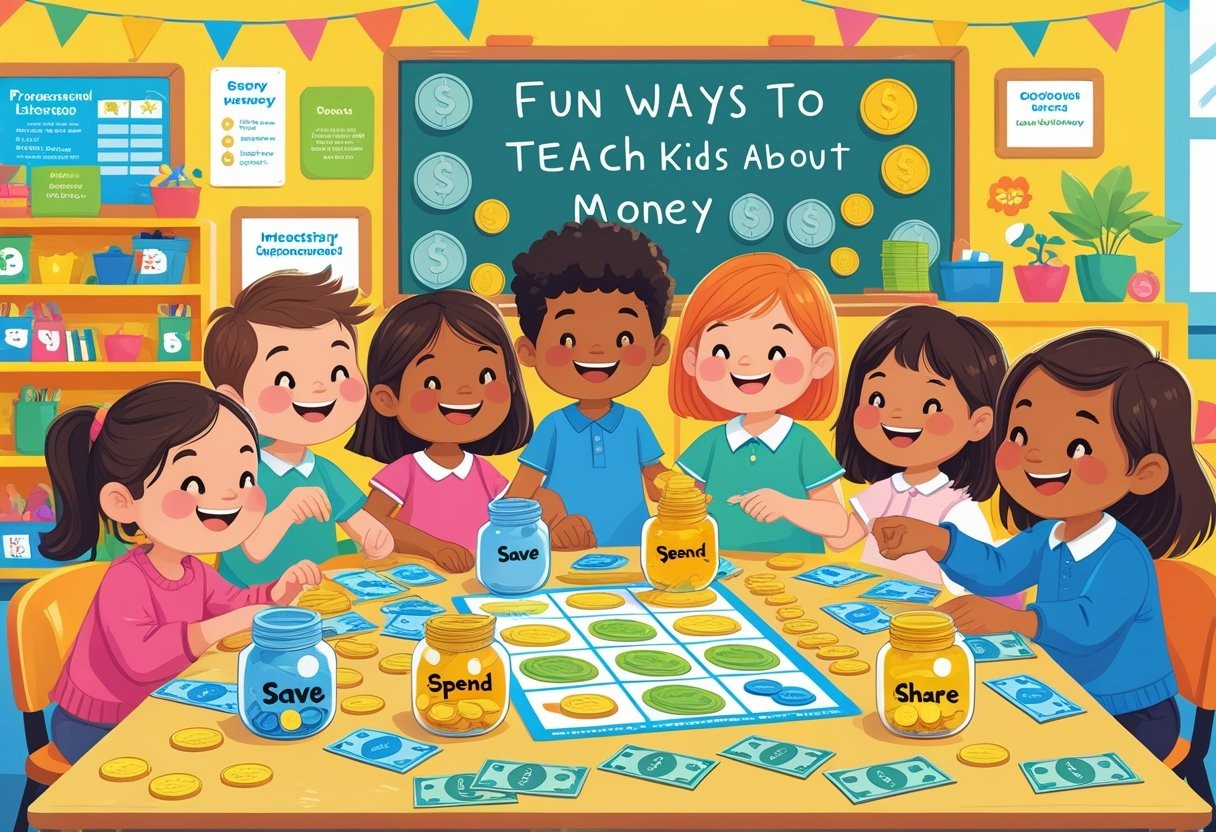
The three-container approach divides money into spend, save, and share portions.
Children physically place cash or coins into separate jars, envelopes, or piggy banks.
This visual system makes abstract concepts tangible.
Each container serves a distinct purpose.
The spending jar holds money for immediate purchases.
The saving jar accumulates funds for bigger goals.
The sharing jar designates money for donations or helping others.
Container Breakdown:
- Spend: 50-60% for current wants and needs
- Save: 30-40% for future goals and emergencies
- Share: 10-20% for charity and helping others
Parents can adjust percentages based on family values and child’s age.
Younger children might start with equal thirds.
Older kids can customize ratios as they learn their priorities.
Regular review sessions reinforce learning.
Parents and children discuss progress toward savings goals, spending decisions made, and organizations to support.
Physical containers work better than abstract tracking for young learners.
Clear jars let children see money accumulate.
Decorating containers personalizes the system and increases engagement.
What Digital Tools and Websites Make Money Learning Engaging?
Banking apps designed for children provide supervised financial experiences. These applications connect to parent-controlled accounts.
Kids can track balances, set goals, and request transfers while parents monitor activity.
Educational websites offer free games and printables. Many teach kids money skills with fun activities through interactive challenges.
These platforms often organize content by age group.
Prepaid debit cards give older children real spending experience with training wheels. Parents load funds and set spending limits.
Transaction alerts help families discuss purchases and budgeting in real-time.
Popular Digital Learning Features:
- Virtual savings jars with visual progress bars
- Spending trackers showing category breakdowns
- Goal-setting tools with timeline calculators
- Reward systems for completing financial tasks
- Parent-child messaging about money decisions
YouTube channels create entertaining financial content for kids. Animated videos explain concepts like compound interest, inflation, and investing.
These short-format lessons fit modern attention spans.
Podcast options exist for families who prefer audio learning. Shows featuring kid-friendly hosts discuss money topics during car rides or chores.
Episodes typically run 10-20 minutes.