
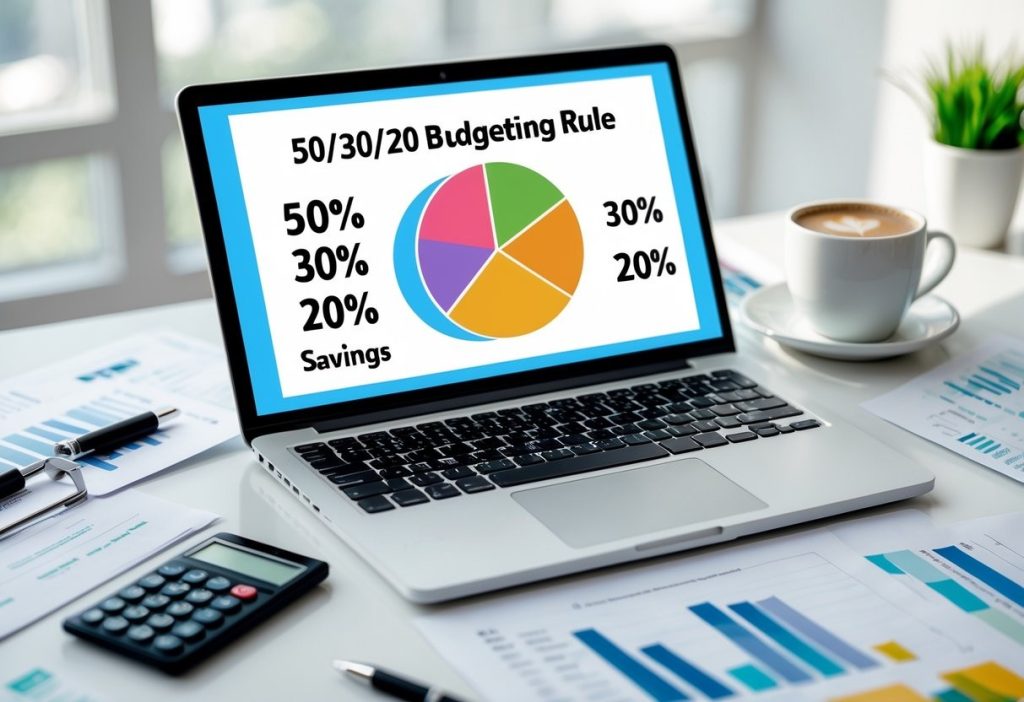

Managing your money doesn’t have to be complicated.
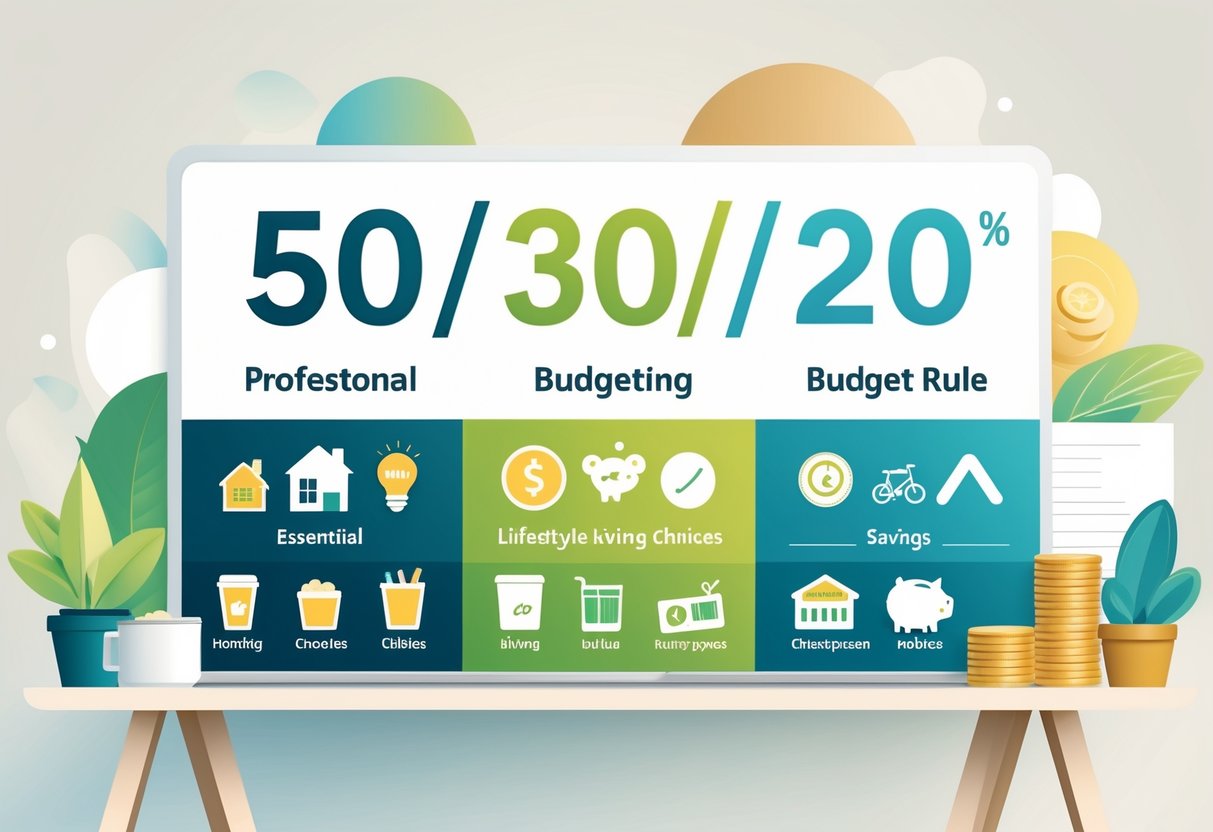
The 50/30/20 rule is a budgeting method that divides your after-tax income into three simple categories: 50% for needs, 30% for wants, and 20% for savings and debt payments.
This approach gives you a clear framework to follow without requiring you to track every single dollar you spend.
- Key Takeaways
- What Is the 50/30/20 Rule?
- Breaking Down the 50/30/20 Categories
- Step-by-Step Guide to Creating a 50/30/20 Budget
- Tools and Resources to Simplify Budgeting
- Comparing the 50/30/20 Rule With Other Budgeting Methods
- Maximizing the Benefits and Addressing Limitations
- Frequently Asked Questions
- What is the ideal way to split expenses according to the budgeting rule?
- How can one adapt the budgeting principle when dealing with irregular income?
- What are some effective methods for tracking and managing one's spending in each of the budget categories?
- Can this budgeting strategy be applied to both high- and low-income individuals effectively?
- What variations to the budgeting percentages could better suit an individual's financial goals?
- Is it more effective to use this budgeting rule with a monthly or an annual financial plan?
The 50/30/20 budgeting strategy has become popular because it balances your current expenses with your future financial goals.
You can pay your bills, enjoy your life, and still put money away for emergencies or retirement.
This system works whether you earn $3,000 or $10,000 each month.
However, this rule isn’t perfect for everyone.
Your actual expenses might not fit neatly into these percentages.
Understanding how the 50/30/20 rule works and when to adjust it will help you decide if it’s the right choice for your situation.
Key Takeaways
- The 50/30/20 rule splits your after-tax income into needs, wants, and savings using fixed percentages
- This budgeting method offers a simple starting point but may need adjustments based on your income and expenses
- You can use budgeting tools and apps to track your spending and stay within each category
What Is the 50/30/20 Rule?
The 50/30/20 budget rule divides your after-tax income into three spending categories: 50% for needs, 30% for wants, and 20% for savings.
This approach gives you a clear framework for managing money without tracking every dollar you spend.
Origin and History
Senator Elizabeth Warren introduced the 50/30/20 rule in her book “All Your Worth: The Ultimate Lifetime Money Plan.”
She created this budget rule to help people manage their personal finance in a way that was easy to understand and follow.
The rule became popular because it simplified budgeting.
Before this approach, many people struggled with complicated budget systems that required detailed tracking of every expense.
Warren designed the 50/30/20 method to work for anyone, regardless of their income level.
LearnVest and other financial planning companies later adopted this budgeting method.
Core Principles
The budget rule splits your income into three main categories.
Needs take up 50% of your after-tax income and include rent, groceries, utilities, insurance, and minimum debt payments.
These are expenses you must pay to live and work.
Wants get 30% of your income.
This category covers things like dining out, entertainment, vacations, and luxury purchases.
You can live without these items, but they make life more enjoyable.
Savings receives the final 20%.
This portion goes toward emergency funds, retirement accounts, investments, and extra debt payments beyond the minimum.
How the 50/30/20 Rule Works
You start by calculating your after-tax income, which is the money you receive after taxes are taken out.
If you earn $3,500 per month after taxes, you would allocate $1,750 to needs, $1,050 to wants, and $700 to savings.
Track your current spending for one or two months to see where your money goes.
Sort each expense into needs, wants, or savings.
This helps you understand if your spending already matches the 50/30/20 breakdown.
If your spending doesn’t match these percentages, you’ll need to make changes.
You might reduce wants or find ways to lower your needs through actions like cooking at home more often or choosing a less expensive phone plan.
Setting up automatic transfers to savings accounts helps you stick to the 20% savings goal without thinking about it each month.
Breaking Down the 50/30/20 Categories
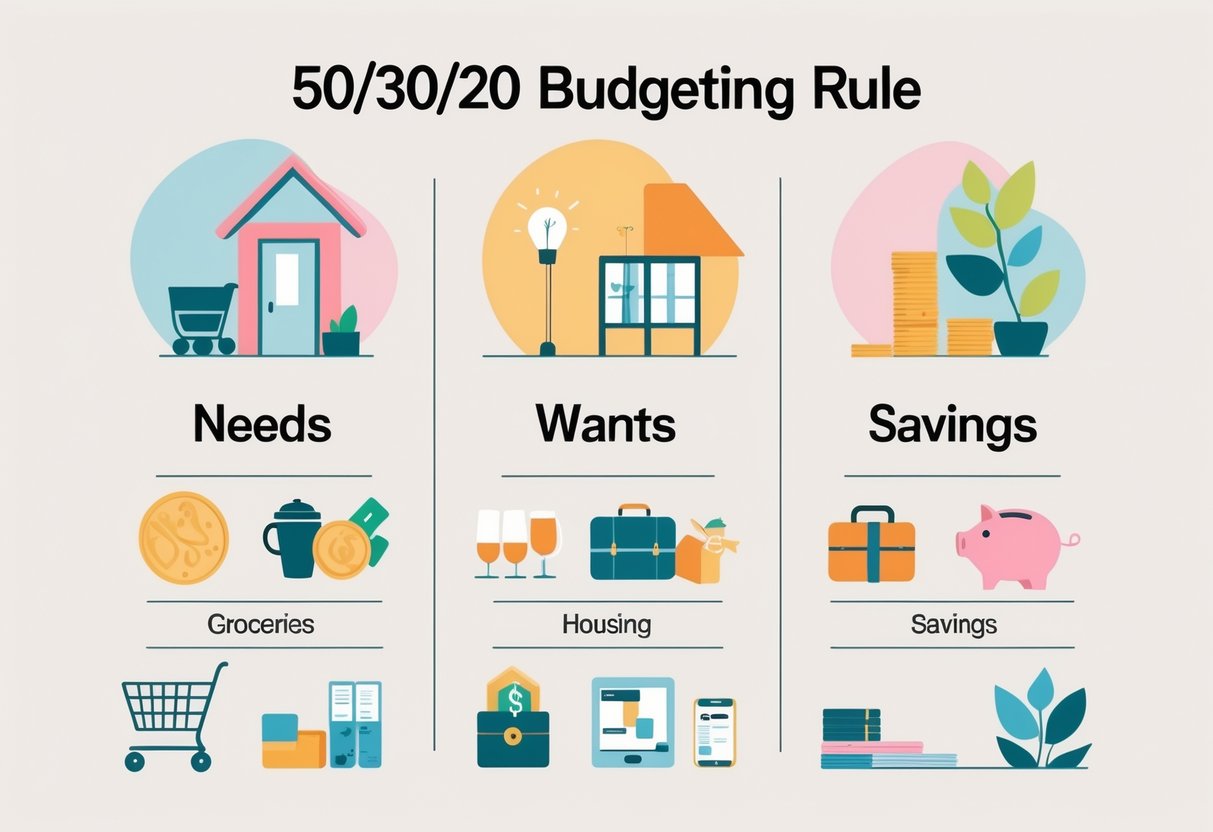
The rule divides your monthly after-tax income into three distinct spending areas, each with a specific purpose.
Understanding what belongs in each category helps you make better decisions about where your money should go.
Needs: Essential Expenses
Needs take up 50% of your net income and include bills you must pay to survive and function.
These are expenses you cannot avoid without serious consequences to your health, safety, or ability to earn income.
Your essential expenses include:
- Rent or mortgage payments
- Utilities like electricity, water, and heat
- Groceries and basic food items
- Health insurance and necessary medical care
- Car payments and insurance
- Minimum debt payments on credit card debt
- Student loan payments (at least the minimum required)
- Basic clothing for work or school
- Transportation costs to get to work
If you spend more than 50% on needs, you may need to find ways to cut costs.
This could mean moving to a cheaper apartment or finding a less expensive car.
You might also consider carpooling or cooking at home more often to reduce these costs.
Wants: Discretionary Spending
Wants make up 30% of your post-tax income and cover things that improve your life but are not required.
These are choices you make to enjoy life more, not expenses you need to survive.
This discretionary spending includes:
- Eating at restaurants or ordering takeout
- Entertainment like movies, concerts, or sports events
- Streaming services and cable TV
- Gym memberships when you could work out at home
- Vacations and travel for fun
- Shopping for clothes beyond basic needs
- Hobbies and leisure activities
- The latest phones or electronics when your current ones work fine
The key difference between needs and wants is whether you would face real hardship without them.
You need groceries but want restaurant meals.
You need basic transportation but want a luxury car.
Savings and Debt Repayment
The final 20% of your monthly after-tax income goes toward building financial security and paying down debt faster.
This savings category helps you prepare for emergencies and reach long-term money goals.
Your 20% should cover:
- Emergency fund savings (aim for three to six months of expenses)
- Retirement account contributions
- Extra payments on student loan payments beyond the minimum
- Additional credit card debt payments above what is required
- Investments in stocks or index funds
- Saving for a house down payment
- Money for future major purchases
Start by building your emergency fund before focusing on other goals.
Once you have that safety net, you can split this 20% between retirement savings and paying off debt faster than required.
Step-by-Step Guide to Creating a 50/30/20 Budget
Setting up your budget requires three main actions: figuring out what you actually take home each month, sorting your spending into the right categories, and making changes that fit your real life.
Calculating Your After-Tax Income
Your after-tax income is the money that lands in your bank account after taxes and deductions come out.
This is not your salary or hourly rate listed on your job offer.
Look at your pay stub to find your net pay.
Add up all deposits you receive in a typical month, including any side income or freelance payments after taxes.
If your income changes each month, calculate an average from the past three to six months.
For example, if you earned $3,200 in December, $3,900 in January, and $3,500 in February, your average monthly income is $3,533.
Take this number and multiply it by the percentages:
- 50% for needs = $1,767
- 30% for wants = $1,060
- 20% for savings = $706
These amounts become your spending plan targets for each category.
Categorizing and Tracking Your Expenses
List every expense from the past month and place it into needs, wants, or savings.
Check your bank statements, credit card bills, and cash spending.
Needs include:
- Rent or mortgage
- Utilities and internet
- Groceries
- Transportation and gas
- Insurance payments
- Minimum debt payments
- Required medications
Wants include:
- Dining out and takeout
- Streaming subscriptions
- Shopping and hobbies
- Gym memberships
- Entertainment
Savings and debt payoff include:
- Emergency fund contributions
- Retirement accounts
- Extra debt payments beyond minimums
- Short-term savings goals
You can track your expenses with a simple spreadsheet, banking app, or budget template.
Weekly check-ins work better than daily tracking because they keep you aware without creating stress.
Adjusting for Your Personal Situation
Your first budget rarely matches the standard 50/30/20 split perfectly.
If your needs take up 60% of your income because of high rent, adjust to a 60/20/20 budget plan instead.
Compare your actual spending to your targets in each category.
If you spent $2,100 on needs but only have $1,767 available, look for ways to reduce fixed costs or shift to a modified version of the budget framework like 70/20/10.
When expenses exceed your income in any category, you have three options: cut spending in that area, reduce another category to compensate, or increase your income.
Many people start by trimming wants first since these are easier to control.
Review your monthly budget every four weeks and make small changes as bills, income, or priorities shift.
Tools and Resources to Simplify Budgeting
A 50/30/20 calculator quickly shows you how much money belongs in each category. Budgeting apps track your spending automatically and send alerts when you’re close to your limits.
Templates give you a ready-made structure to follow. They make it easy to organize your budget from the start.
Using a 50/30/20 Calculator
A budget calculator using the 50/30/20 rule does the math for you in seconds. You enter your monthly take-home pay, and it shows you the dollar amount for needs, wants, and savings.
These calculators remove guesswork and calculation errors. You get accurate targets immediately without using your phone calculator every time your income changes.
Most calculators let you adjust the percentages if you need to shift to 55/25/20 or 60/20/20. Some let you input your actual expenses to see if you’re over or under in each category.
This comparison helps you spot problem areas fast. You can find free calculators online that work on any device without requiring an account or download.
Budgeting Apps and Templates
A budgeting app connects to your bank accounts and credit cards to track spending automatically. You set your 50/30/20 limits once, and the app categorizes transactions as they happen.
Popular apps send push notifications when you’re approaching your spending cap in any category. Templates work well if you prefer manual tracking or want full control.
You can download a spreadsheet or printable PDF that already has the three categories set up. You simply fill in your income and expenses each week or month.
Budgeting tools and apps range from free basic versions to paid options with features like bill reminders and debt payoff calculators. Choose based on whether you want automation or prefer hands-on tracking.
Automating Your Savings
Automation removes the need to remember to save each month. You set up automatic transfers from your checking account to separate accounts on payday.
Your 20% savings allocation moves before you can spend it. Most banks let you create multiple savings accounts at no cost.
Name one “Emergency Fund” and another “Retirement” or “Debt Payoff” so you know exactly where each dollar goes. Schedule transfers for the day after your paycheck hits.
You can automate the other categories too by moving 50% to a needs account and 30% to a wants account or prepaid card. This physical separation makes it nearly impossible to overspend because the money simply isn’t available in the wrong account.
Comparing the 50/30/20 Rule With Other Budgeting Methods
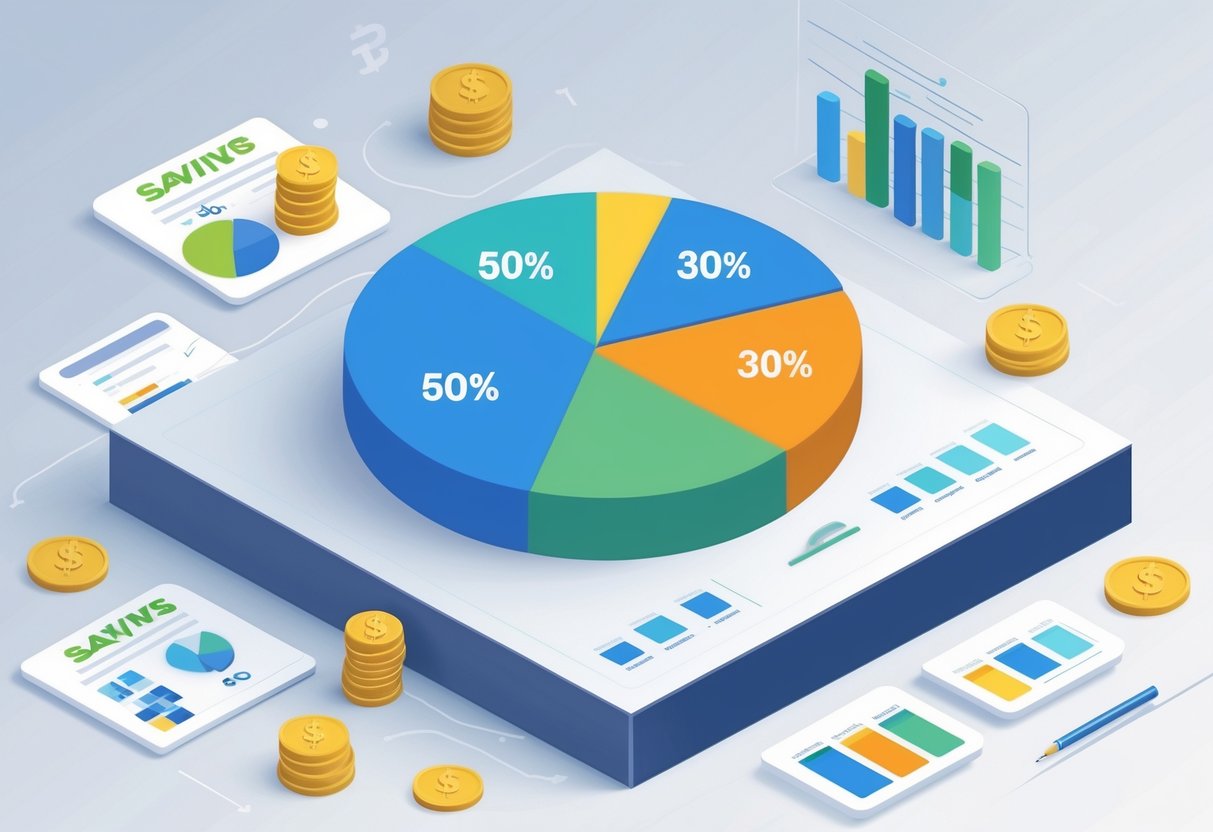
Different budgeting methods work better for different financial situations and goals. Zero-based budgeting offers more detailed control over every dollar.
Percentage-based alternatives like the 70/20/10 rule provide simpler frameworks with different priority splits. Each method has strengths depending on your needs.
50/30/20 Rule vs. Zero-Based Budgeting
Zero-based budgeting requires you to assign every dollar of your income to a specific category until you reach zero. This means you account for all expenses, savings, and debt payments before the month begins.
The main difference is specificity. With a zero-based budget, you plan exactly where each dollar goes.
You might allocate $150 for groceries, $60 for gas, and $40 for streaming services. The 50/30/20 rule only gives you broad categories without tracking individual expenses.
Zero-based budgeting takes more time since you must anticipate every expense. However, it gives you complete awareness of your spending patterns.
The 50/30/20 rule is faster to maintain but offers less detailed insight into where your money actually goes. Your choice depends on your goals.
Zero-based budgeting works well if you need strict control to pay off debt or if you have irregular income. The percentage approach suits you better if you want a simple framework without detailed tracking.
Alternatives: 70/20/10 Rule and More
The 70/20/10 rule splits your income differently: 70% for living expenses, 20% for savings and debt, and 10% for charitable giving or personal development. This approach reduces the emphasis on wants compared to the traditional split.
Other budgeting methods that work differently include the 60/30/10 rule for expensive cities and the pay-yourself-first method. The 60/30/10 approach allows 60% for needs, 30% for savings, and 10% for wants.
Your personal savings rate varies significantly with each method. The standard 50/30/20 rule targets 20% savings, while the 60/30/10 method increases your savings to 30%.
Each method addresses different financial priorities. Choose based on your living costs, debt level, and how much flexibility you need in your daily spending.
Maximizing the Benefits and Addressing Limitations
The 50/30/20 rule offers a simple framework for money management. Understanding its strengths and weaknesses helps you use it effectively.
Adjusting the percentages to match your income level and financial goals makes this budgeting method work better for your situation. Flexibility is important for success.
Benefits of the 50/30/20 Rule
This budgeting method gives you a clear starting point without requiring complex spreadsheets or calculations. You can set up your budget in minutes by dividing your after-tax income into three categories.
The rule automatically builds financial goals into your spending plan. Twenty percent of your income goes toward savings and debt repayment every month.
This consistent approach helps you build an emergency fund, contribute to retirement savings, and pay off debt at the same time. You get flexibility within each category.
The 30% wants section lets you enjoy life while still managing money responsibly. You decide which entertainment, hobbies, or dining expenses matter most to you.
The simple budgeting framework helps you balance present lifestyle with future financial security. You avoid overspending on wants because the categories set natural limits on discretionary purchases.
Limitations and Potential Challenges
High cost of living areas make the 50% needs allocation difficult to maintain. Your housing expenses alone might exceed this percentage in expensive cities.
The rule assumes average living costs that don’t match every location. Low income situations create challenges for the 20% savings requirement.
When you earn less money, covering basic needs takes up more of your budget. You might need to temporarily reduce savings to pay for essentials.
The categories can blur together. You might struggle to decide if certain expenses count as needs or wants.
A basic cell phone is a need, but an expensive unlimited data plan might be a want. Variable income from freelancing or seasonal work makes consistent percentages harder to follow.
Your budget needs to flex with your earnings each month. You can’t always predict exactly how much to allocate to each category.
Customizing the Rule for Your Needs
Start by adjusting the percentages to match your situation. If you have high-interest debt, consider a 50/20/30 split instead.
This puts more money toward debt payoff while reducing wants temporarily. You can divide the 20% savings category into specific goals.
Put 10% in a high-yield savings account for emergencies and 10% toward retirement savings. Create sinking funds within your savings account for planned expenses like car repairs or vacations.
Prioritize your financial goals based on what matters most. Focus on building a three-month emergency fund before increasing retirement contributions.
Pay off high-interest credit cards before adding money to long-term financial goals. Track your spending for one month before committing to specific percentages.
This shows you where your money actually goes. You might discover you need 55% for needs and only have 25% available for wants.
Adjust the rule to reflect your real expenses rather than forcing yourself into percentages that don’t fit.
Frequently Asked Questions
The 50/30/20 budget rule raises common questions about income calculations and adapting to different financial situations. People also wonder whether this approach works for various income levels and how to adjust the percentages for personal goals.
What is the ideal way to split expenses according to the budgeting rule?
You should allocate 50% of your after-tax income to needs, 30% to wants, and 20% to savings and debt repayment. Needs include essential expenses like housing, utilities, groceries, insurance, and minimum debt payments.
Wants cover non-essential items such as dining out, entertainment, hobbies, and streaming services. The 50/30/20 budget allocates your after-tax income across these three broad categories to help you balance current expenses with future financial security.
Your savings category should include emergency funds, retirement contributions, and extra debt payments beyond the minimums. You need to calculate your percentages based on your net income, which is what you take home after taxes and payroll deductions.
This makes the math simpler and more accurate for your actual spending power.
How can one adapt the budgeting principle when dealing with irregular income?
You should base your budget on your lowest expected monthly income to ensure you can cover essential expenses during slow months. Calculate your average income over the past six to twelve months to get a realistic baseline.
When you earn more than your baseline, allocate the extra money to savings or debt repayment first. Set aside money during high-earning months to create a buffer for leaner periods.
This approach helps you maintain consistent spending habits regardless of income fluctuations. You can also adjust your wants category more flexibly based on your actual monthly income.
If you have a strong month, you might increase discretionary spending slightly while still prioritizing your 20% savings goal.
What are some effective methods for tracking and managing one’s spending in each of the budget categories?
You can use budgeting apps that automatically categorize your transactions and show you how much you’re spending in each category. Popular options include YNAB, Mint, and EveryDollar, which sync with your bank accounts for real-time tracking.
Creating separate bank accounts for each category provides a simple visual system for your money. You might have one account for needs, another for wants, and a third for savings.
This method makes it easy to see exactly how much you have available in each category. Spreadsheets offer a manual but customizable approach where you can track every expense and adjust categories to fit your specific situation.
You should review your spending weekly or monthly to ensure you’re staying within your target percentages. Cash envelopes work well for discretionary spending categories if you prefer a tangible method.
You withdraw the allocated amount for wants each month and only spend what’s in the envelope.
Can this budgeting strategy be applied to both high- and low-income individuals effectively?
The 50/30/20 rule works better for middle to high-income earners. They usually have enough income to cover basic needs with 50% or less.
Low-income individuals often struggle because their essential expenses exceed 50% of their take-home pay. This makes the standard percentages unrealistic for them.
If you earn a lower income, you might need to adjust the percentages to something like 70/20/10 or 60/30/10. The important thing is to keep saving, even if it’s a smaller percentage.
High earners can often reduce their needs percentage below 50%. They can increase savings beyond 20% by following a 40/30/30 or 50/20/30 split.
The framework provides a starting point. You should modify it based on your financial situation and goals.
Your housing costs, location, and family size all affect whether the standard percentages work for you.
What variations to the budgeting percentages could better suit an individual’s financial goals?
You might use a 70/20/10 split if you’re dealing with high essential costs or living in an expensive area. This allows you to cover your needs while still saving a portion of your income.
A 50/20/30 approach switches the wants and savings percentages. This helps you focus on financial goals over discretionary spending.
The 60/20/20 rule reduces wants to 20% and splits the extra 10% between needs and savings. This is useful when your essential expenses are slightly above 50% but you want to keep saving regularly.
If you have aggressive financial goals like early retirement, you might follow a 50/10/40 split. This increases savings and requires strict limits on discretionary spending.
Is it more effective to use this budgeting rule with a monthly or an annual financial plan?
You should apply the 50/30/20 rule on a monthly basis. Most bills and income arrive monthly, so this approach matches your regular cash flow.
Monthly budgeting makes it easier to track spending patterns and adjust as needed. It helps you catch problems quickly and make corrections before they grow.
You can see right away if your spending in one category is too high and take action. Some expenses, like car insurance or holiday spending, are irregular and do not occur every month.
Divide these annual costs by 12 and include them in your monthly budget. Setting aside money each month for these predictable annual costs keeps your budget stable and helps prevent overspending.




1 thought on “50/30/20 Rule: The Complete Guide to Budgeting for Success”